
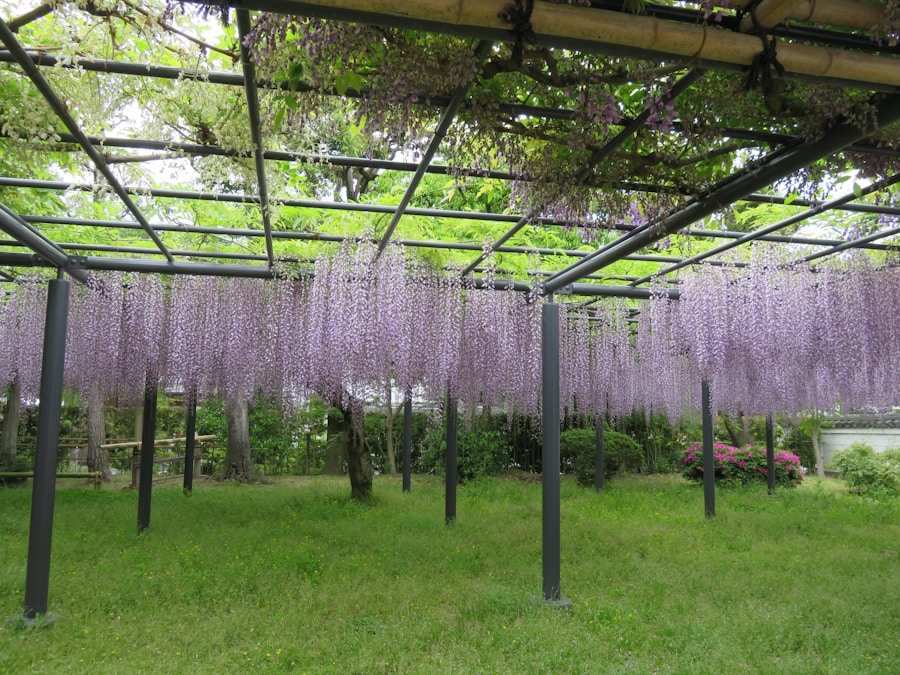
Selecting the ideal location for your wisteria trellis is a critical first step in ensuring the health and beauty of this stunning flowering vine. Wisteria thrives in full sun, requiring at least six hours of direct sunlight each day to produce its characteristic lush foliage and abundant blooms. When scouting for a suitable spot, consider areas that receive ample sunlight throughout the day, such as south-facing walls or open garden spaces.
Additionally, wisteria prefers well-drained soil, so avoid low-lying areas where water tends to pool after heavy rains. A location with good air circulation is also beneficial, as it helps to prevent fungal diseases that can affect the plant. Another important factor to consider is the proximity to structures or other plants.
Wisteria can grow quite large and heavy, often reaching heights of 30 feet or more, depending on the variety. Therefore, it is essential to position your trellis away from delicate structures or plants that may be overshadowed or damaged by the vigorous growth of wisteria. Ideally, the trellis should be placed against a sturdy wall or fence that can support the weight of the vine as it matures.
Furthermore, consider the aesthetic aspects of your garden; placing the trellis in a visible area will allow you to enjoy the cascading blooms and sweet fragrance that wisteria is known for.
Key Takeaways
- Choose a location with full sun and well-drained soil for your wisteria trellis
- Prepare the soil by digging a wide and deep hole, adding compost, and ensuring good drainage
- Select a wisteria variety that is suited to your climate and space, such as Chinese wisteria for warmer climates or American wisteria for smaller spaces
- Plant wisteria in the spring or fall, and water regularly to establish a strong root system
- Train wisteria by tying new growth to the trellis and prune regularly to promote flowering and prevent overgrowth
Preparing the soil for planting wisteria
Once you have chosen the perfect location for your wisteria trellis, the next step is to prepare the soil for planting. Wisteria prefers a slightly acidic to neutral pH level, ideally between 6.0 and 7.
Conducting a soil test can provide valuable insights into the pH and nutrient levels of your garden soil.
If your soil is too acidic, you can amend it with lime; conversely, if it is too alkaline, adding sulfur can help lower the pH. Additionally, wisteria thrives in rich, loamy soil that is well-draining. To achieve this, you may need to incorporate organic matter such as compost or well-rotted manure into the planting area.
Before planting, it is also crucial to ensure that the soil is loose and aerated. This can be accomplished by tilling the soil to a depth of at least 12 inches, breaking up any compacted areas that could hinder root growth. If your soil is particularly heavy clay or sandy, consider creating raised beds or mounds to improve drainage and promote healthy root development.
After preparing the soil, it’s advisable to let it rest for a few days before planting to allow any amendments to settle in and integrate with the existing soil structure.
Selecting the right wisteria variety for your trellis
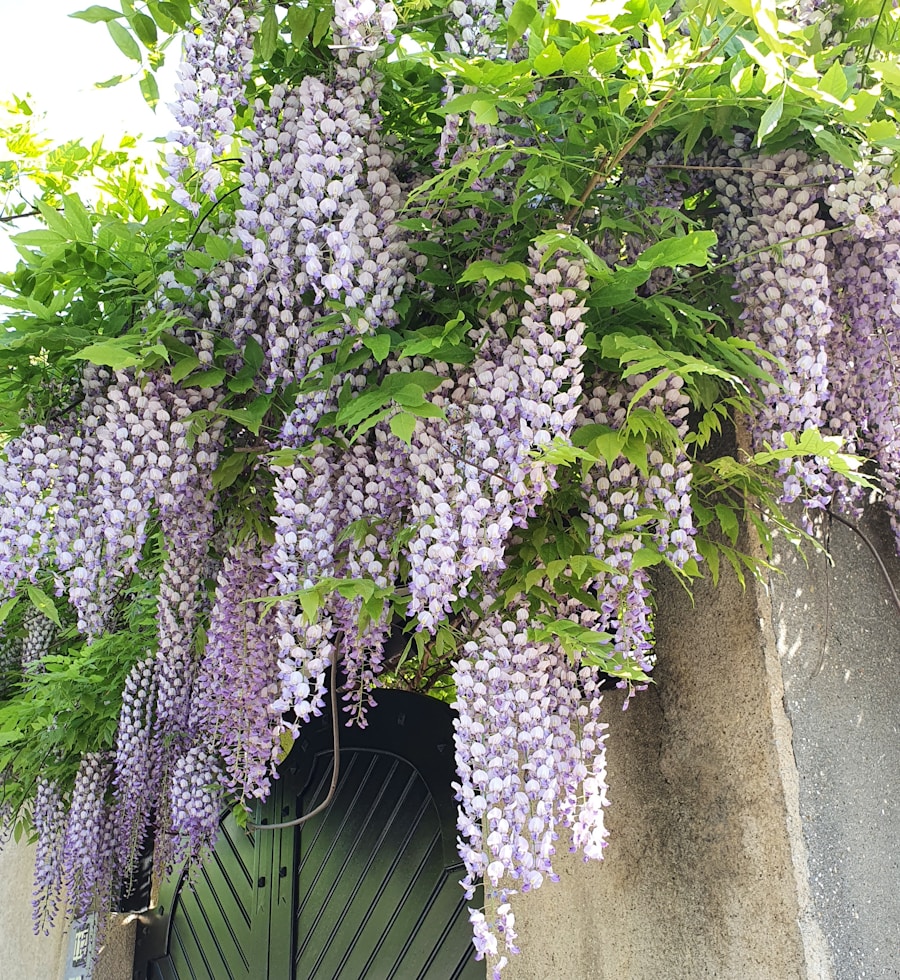
Choosing the right variety of wisteria is essential for achieving the desired aesthetic and ensuring compatibility with your growing conditions. There are several species of wisteria, each with unique characteristics and growth habits. The most commonly cultivated varieties include Wisteria sinensis (Chinese wisteria) and Wisteria floribunda (Japanese wisteria).
Chinese wisteria is known for its vigorous growth and long racemes of fragrant flowers that can reach lengths of up to 12 inches. In contrast, Japanese wisteria produces slightly shorter flower clusters but offers a longer blooming period, often extending from late spring into early summer. When selecting a variety, consider your climate zone and local growing conditions.
Some varieties are more cold-hardy than others; for instance, Wisteria floribunda is better suited for cooler climates compared to its Chinese counterpart. Additionally, there are cultivars that have been bred for specific traits such as shorter growth habits or unique flower colors. For example, ‘Blue Moon’ is a compact variety that produces stunning blue-purple flowers and is ideal for smaller gardens or trellises with limited space.
Planting and establishing wisteria on a trellis
The actual planting process for wisteria involves careful attention to detail to ensure successful establishment on your trellis. Begin by digging a hole that is twice as wide and just as deep as the root ball of your wisteria plant. This will provide ample space for the roots to spread out and establish themselves in their new environment.
When placing the plant in the hole, ensure that the top of the root ball is level with or slightly above the surrounding soil surface to prevent water from pooling around the base of the plant. After positioning your wisteria in the hole, backfill with soil while gently tamping it down to eliminate air pockets. Water thoroughly after planting to help settle the soil around the roots and provide moisture for initial growth.
It’s also beneficial to apply a layer of mulch around the base of the plant to retain moisture and suppress weeds during the establishment phase. During this time, monitor your wisteria closely for signs of stress or transplant shock, such as wilting leaves or stunted growth. Providing consistent watering during dry spells will help your plant acclimate to its new home.
Training and pruning wisteria on a trellis
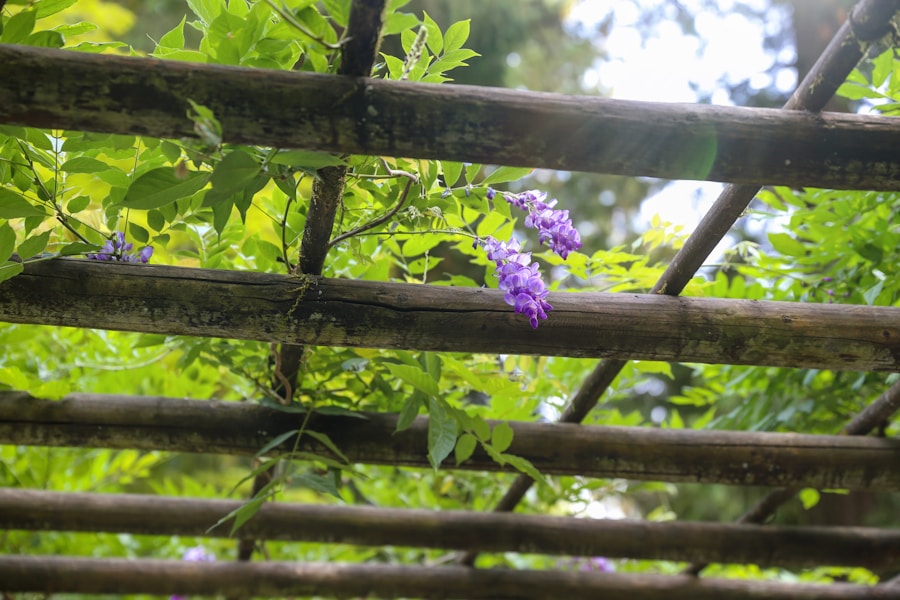
Training wisteria on a trellis requires patience and regular attention to guide its growth in a desirable direction. As wisteria vines begin to grow, they will naturally seek support by twining around structures. To encourage this behavior, gently tie young shoots to the trellis using soft ties or garden twine, ensuring not to constrict their growth.
It’s important to start this training early in the plant’s life; doing so will help establish a strong framework for future growth and flowering. Pruning is another essential aspect of maintaining wisteria on a trellis. The best time to prune is during late winter or early spring before new growth begins.
This practice not only helps control the size and shape of the vine but also promotes more abundant flowering by removing old wood that may not produce blooms. When pruning, focus on cutting back long shoots to encourage lateral growth and remove any dead or diseased branches. Regular pruning will also help maintain good air circulation within the plant, reducing the risk of fungal diseases.
Providing proper care and maintenance for wisteria on a trellis
Proper care and maintenance are vital for ensuring that your wisteria thrives on its trellis over time. Regular watering is essential during dry periods, especially in the first few years after planting when the roots are still establishing themselves. Wisteria prefers moist but not soggy soil; therefore, it’s crucial to monitor moisture levels and adjust your watering schedule accordingly.
Once established, wisteria can tolerate some drought but will perform best with consistent moisture. Fertilization also plays a significant role in maintaining healthy growth and vibrant blooms. A balanced fertilizer applied in early spring can provide essential nutrients that support vigorous growth during the growing season.
However, be cautious not to over-fertilize; excessive nitrogen can lead to lush foliage at the expense of flowers. Instead, opt for a slow-release fertilizer specifically formulated for flowering plants to ensure a steady supply of nutrients throughout the growing season.
Dealing with common pests and diseases affecting wisteria on a trellis
Despite their hardiness, wisteria can be susceptible to various pests and diseases that may threaten their health and vigor when grown on a trellis. Common pests include aphids, spider mites, and scale insects, which can sap vital nutrients from the plant and lead to stunted growth or leaf drop. Regularly inspecting your plants for signs of infestation is crucial; if you notice any pests, consider using insecticidal soap or neem oil as an organic treatment option.
In addition to pests, wisteria can also be affected by diseases such as powdery mildew and root rot. Powdery mildew typically appears as a white powdery coating on leaves during humid conditions and can be managed through proper air circulation and spacing between plants. Root rot often results from overwatering or poorly drained soil; therefore, ensuring adequate drainage at planting time is essential for preventing this issue.
If root rot occurs, it may be necessary to remove affected plants and amend the soil before replanting.
Enjoying the beauty and fragrance of wisteria on your trellis
As your wisteria matures on its trellis, you will be rewarded with an enchanting display of beauty and fragrance that transforms your outdoor space into a serene retreat. The cascading clusters of flowers create a stunning visual impact, often attracting pollinators such as bees and butterflies that enhance the overall garden ecosystem. The intoxicating scent of blooming wisteria adds another layer of sensory delight; many gardeners find themselves drawn outside simply to bask in its fragrance during peak bloom.
In addition to their aesthetic appeal, wisteria vines can serve practical purposes in your garden design. They provide shade when grown over pergolas or arbors, creating inviting outdoor spaces perfect for relaxation or entertaining guests. The dense foliage can also act as a natural privacy screen when trained along fences or walls, allowing you to enjoy your garden sanctuary without feeling exposed to neighbors or passersby.
Ultimately, cultivating wisteria on a trellis not only enhances your landscape but also enriches your gardening experience through its beauty and charm.
If you’re interested in learning how to grow wisteria on a trellis, you may also want to check out this article on how to grow ivy indoors. Both wisteria and ivy are beautiful climbing plants that can add a touch of elegance to your garden or home. By following the tips and techniques outlined in these articles, you can successfully cultivate these plants and enjoy their beauty year-round.
FAQs
What is wisteria?
Wisteria is a genus of flowering plants in the pea family, Fabaceae, that includes ten species of woody climbing vines native to the Eastern United States and East Asia.
What is a trellis?
A trellis is a framework of light wooden or metal bars, chiefly used as a support for fruit trees or climbing plants.
How do you grow wisteria on a trellis?
To grow wisteria on a trellis, you should plant the wisteria near the base of the trellis and train the vines to climb the trellis as they grow. Regular pruning and training will help the wisteria to cover the trellis effectively.
What are the ideal growing conditions for wisteria?
Wisteria thrives in full sun and well-drained soil. It prefers a slightly acidic soil with a pH of 6.0 to 7.0. Wisteria also requires regular watering, especially during dry periods.
How long does it take for wisteria to cover a trellis?
It can take several years for wisteria to fully cover a trellis, as the growth rate of wisteria can vary depending on the specific species and growing conditions. Regular pruning and training can help speed up the process.
How do you prune wisteria on a trellis?
Pruning wisteria on a trellis involves cutting back the long, whippy growth in late winter or early spring to encourage the development of flowering spurs. It’s important to prune wisteria regularly to maintain its shape and encourage flowering.